Coates Hire

Coates Hire
2025
Making part of the team responsible for driving the initial phase (Concept & Discovery) of a major internal software revamp, I was the sole Product designer and worked on improving the current UX for Coates main productivity tool, utilised for quoting, hiring and managing new materials and CRM through all of their branches.
Work Summary
Role(s)

Product Designer
(UX, UI)
PEERS

Project Mgmt,
Lead Developer, QA, Software Architect
TOOL SET

Figma Suite
SCOPE

Concept,
Design
& Discovery
PLATFORM

Web
INDUSTRY

Equipment
Rental
Tailored User Personas
In order to better understand the user, we conducted user interviews and shadowed Coates Hire employees. It was very clear that the business was in need for having specific user personas, based on the teams that most use the application and their specific demands and desires.
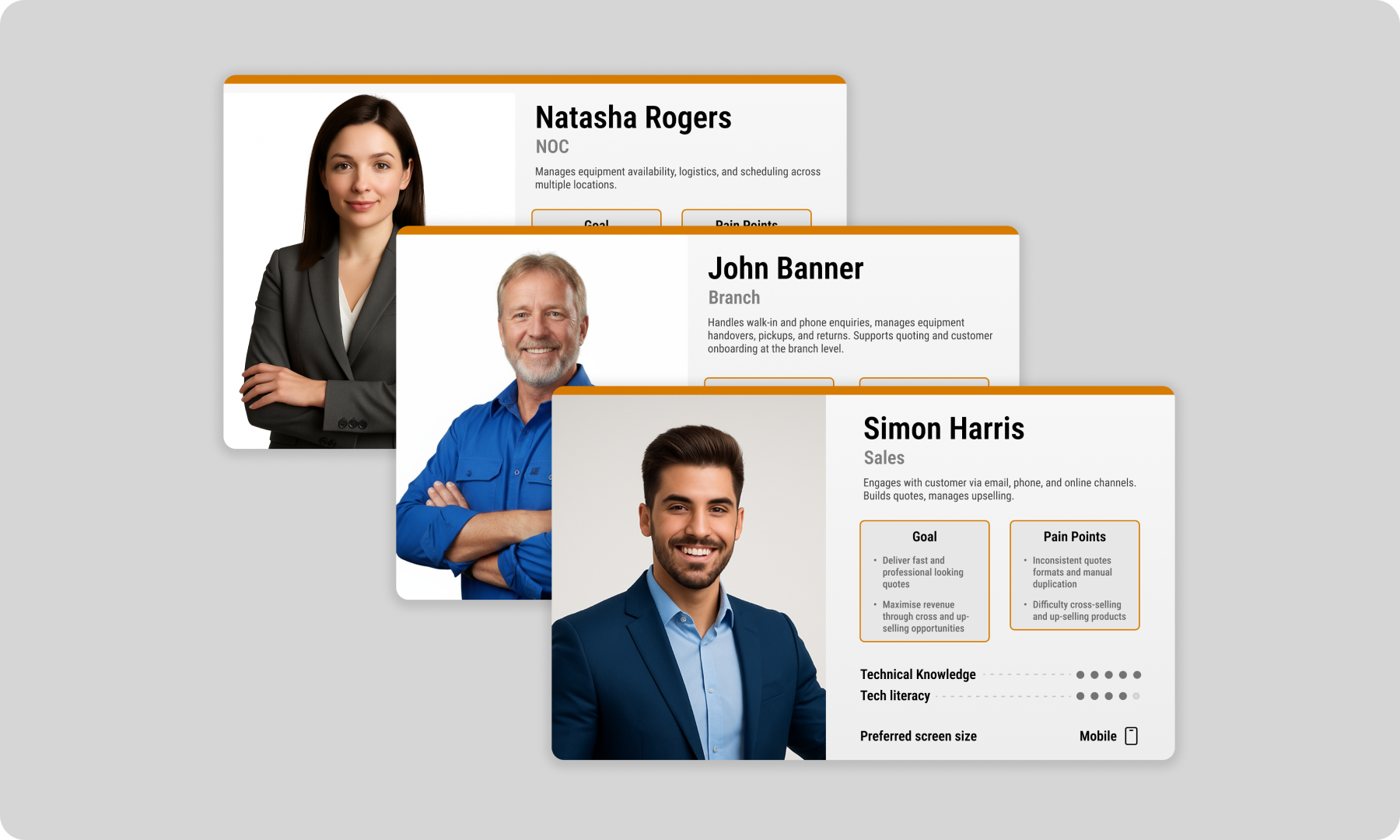
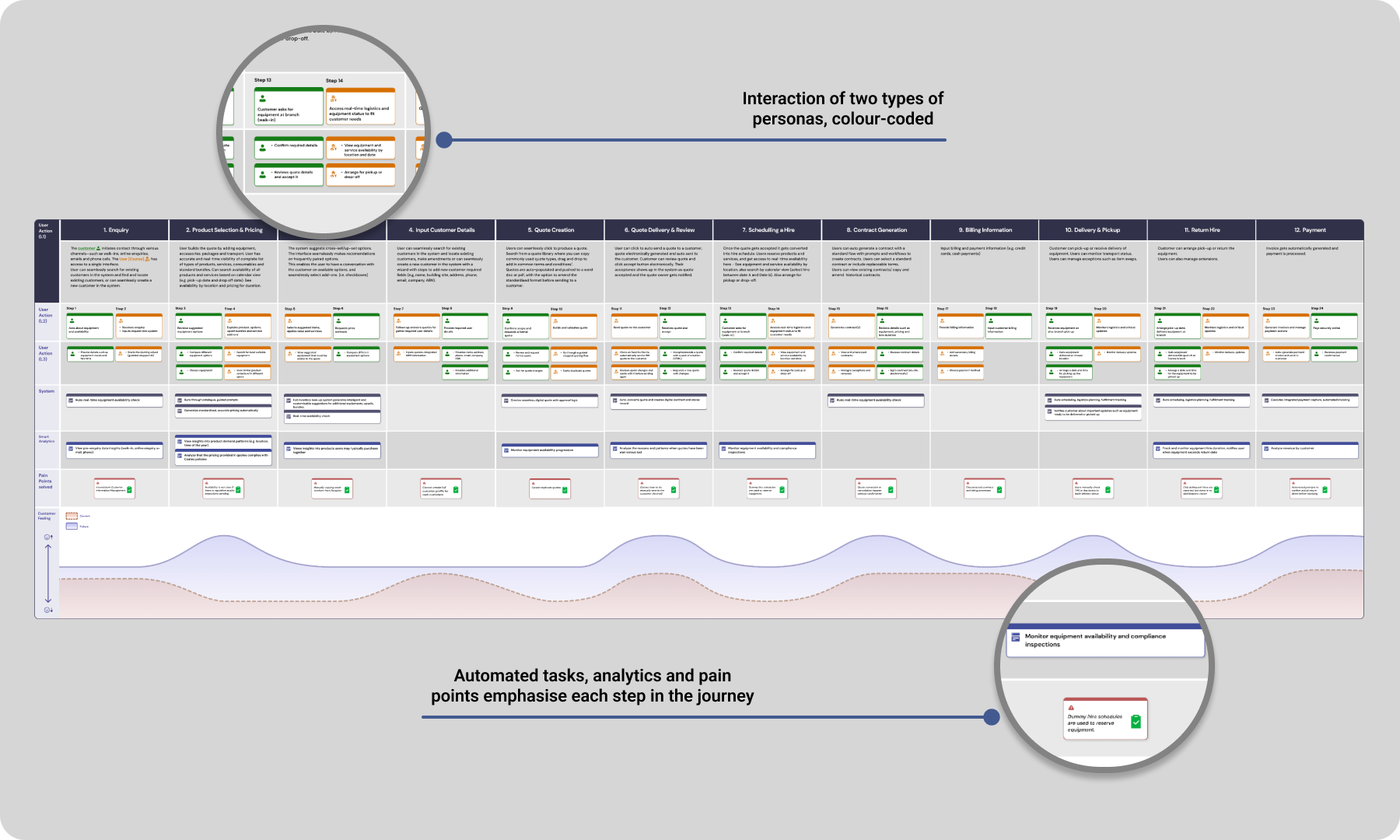
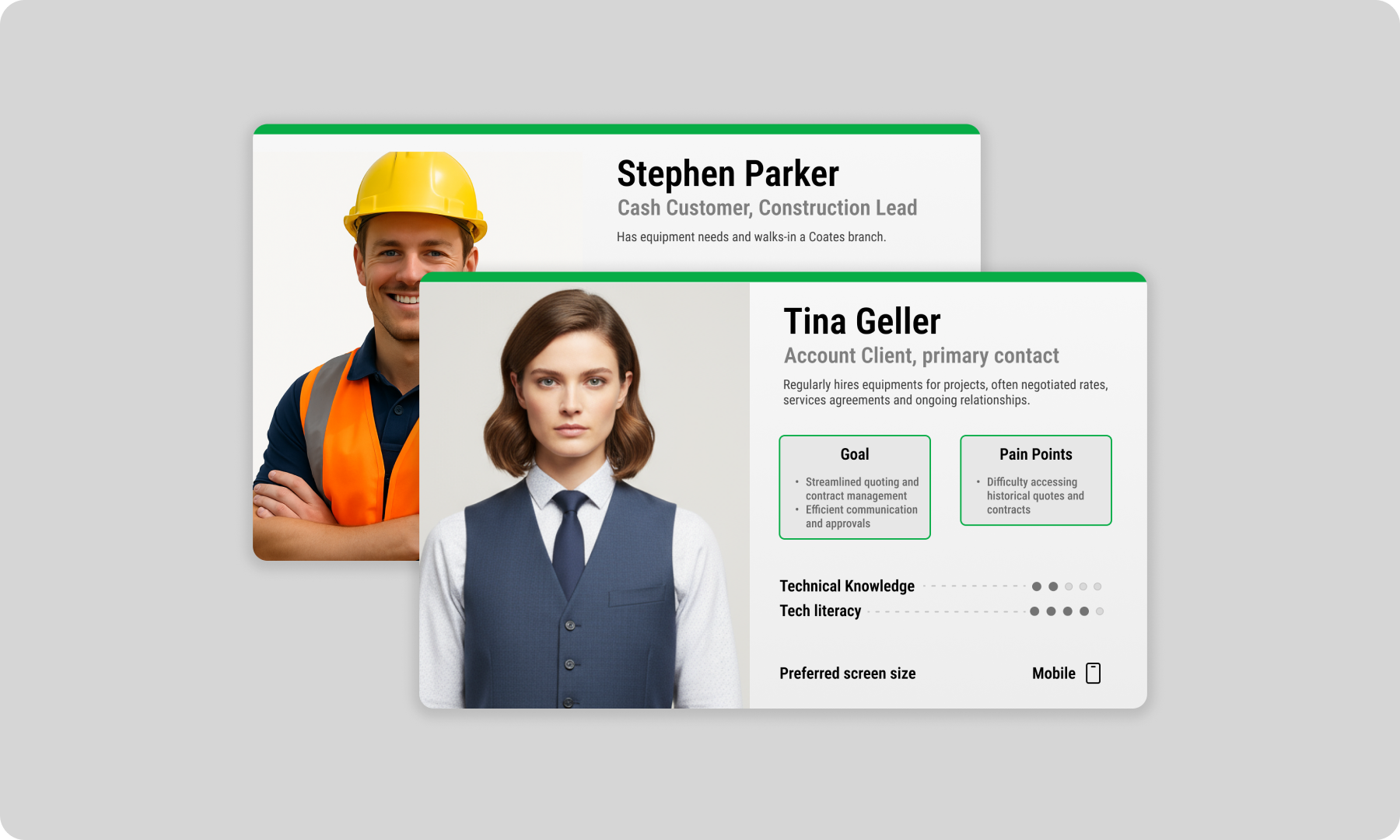
Classifying the user personas into two groups was chosen to be the best practice. All the UX of their productivity tool is supposed to be based on two types of users interacting: Coates employee and Coates customers. Employees would be the actual tool users, the ones who help customers with their equipment needs. Customer personas were added due to their specific pain points and demands: the most critical KPIs for the business.
Fully-interactive prototype
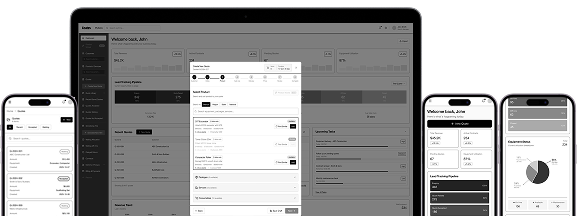
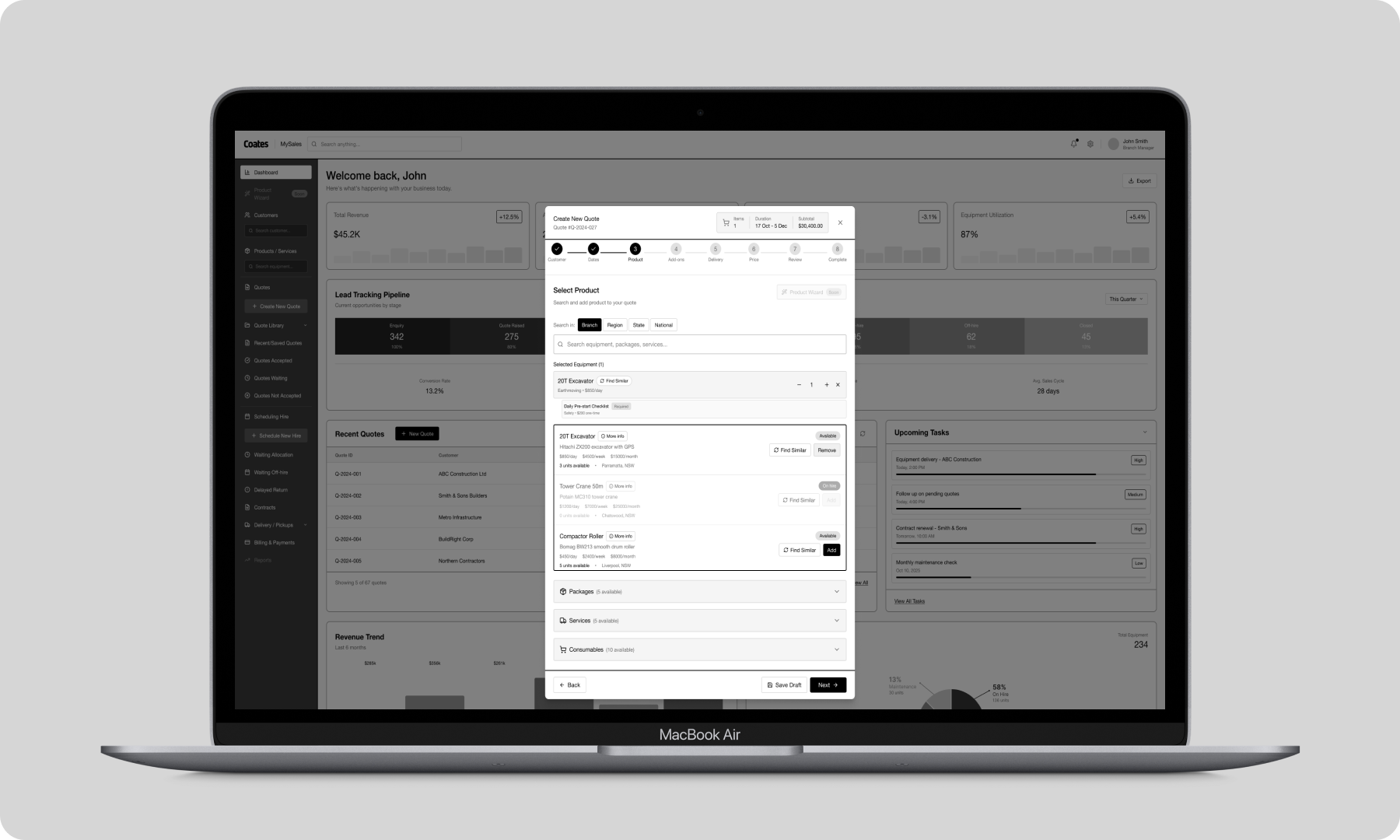
My experience with Coates served as a prime example of my methodology in action, specifically regarding the fluidity and ease of use achieved through low-fidelity prototyping. By stripping away visual complexity early in the cycle, we focused on usability heuristics, ensuring that the foundational logic of the product allowed for efficiency without forcing the user to "figure out" how to navigate the system.
This low-mid-fidelity approach facilitated quick and easy iteration, allowing the team to refine the user flow in real-time and fostering a collaborative spirit that builds trust across technical departments. Ultimately, this stage was about minimising user effort from the ground up, proving that even at the earliest levels of the process, a product can be designed to be both technically sound and exceptionally intuitive.
Salesforce spiritual successor
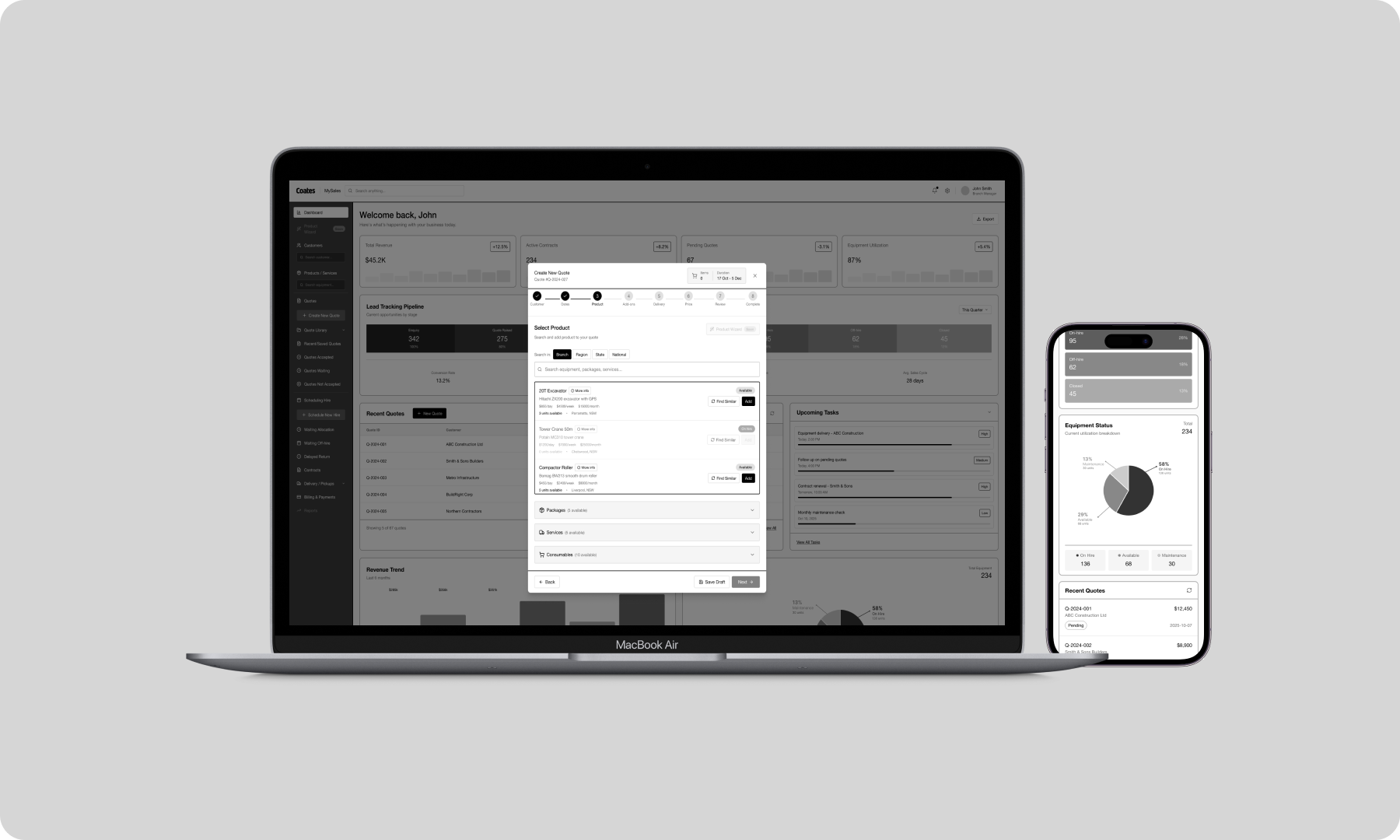
Drawing on the philosophy of the Salesforce Lightning Design System, the Coates prototype focused on scalable asset libraries and consistent components, that reflect industry-standard best practices. While the project resulted in a fully-interactive mid-fidelity prototype, it mirrored the efficiency of Salesforce’s "Record Page" layouts by grouping related information into accessible modules. This approach was about adopting familiar UI patterns to decrease the learning curve for staff, directly supporting my mission of minimising user effort through every level of the process.
Finally, the fluidity of the Coates solution was achieved by adopting an "efficiency first" mindset, a hallmark of successful B2B tools. Just as Salesforce leverages utility bars and global actions to keep frequent tasks within reach, my work on the Coates business management tool filled pre-existing UX gaps by streamlining the transition between the concept and discovery stages. This reflects my methodology that the process must serve the product needs; by analysing how established systems handle complex transactions and CRM tasks, I delivered a solution that empowers users through a collaborative spirit and a highly functional interface
Coates Hire


Work
U
Cognixus
Thriive
Bet Technology
WBS
Oni
Dell
Let's chat

Work
Coates Hire
2025
Making part of the team responsible for driving the initial phase (Concept & Discovery) of a major internal software revamp, I was the sole Product designer and worked on improving the current UX for Coates main productivity tool, utilised for quoting, hiring and managing new materials and CRM through all of their branches.
Work Summary
Role(s)

Product Designer
(UX, UI)
PEERS

Project Manager, Lead Developer, QA, Software Architect
TOOLSET

Figma Suite
SCOPE

Concept, Design
& Discovery
PLATFORM

Web
INDUSTRY

Equipment Rental
Tailored User Personas
In order to better understand the user, we conducted user interviews and shadowed Coates Hire employees. It was very clear that the business was in need for having specific user personas, based on the teams that most use the application and their specific demands and desires.
Classifying the user personas into two groups was chosen to be the best practice. All the UX of their productivity tool is supposed to be based on two types of users interacting: Coates employee and Coates customers. Employees would be the actual tool users, the ones who help customers with their equipment needs. Customer personas were added due to their specific pain points and demands: the most critical KPIs for the business.
Fully-interactive prototype
My experience with Coates served as a prime example of my methodology in action, specifically regarding the fluidity and ease of use achieved through low-fidelity prototyping. By stripping away visual complexity early in the cycle, we focused on usability heuristics, ensuring that the foundational logic of the product allowed for efficiency without forcing the user to "figure out" how to navigate the system.
This low-mid-fidelity approach facilitated quick and easy iteration, allowing the team to refine the user flow in real-time and fostering a collaborative spirit that builds trust across technical departments. Ultimately, this stage was about minimising user effort from the ground up, proving that even at the earliest levels of the process, a product can be designed to be both technically sound and exceptionally intuitive.
Salesforce spiritual successor
Drawing on the philosophy of the Salesforce Lightning Design System, the Coates prototype focused on scalable asset libraries and consistent components, that reflect industry-standard best practices. While the project resulted in a fully-interactive mid-fidelity prototype, it mirrored the efficiency of Salesforce’s "Record Page" layouts by grouping related information into accessible modules. This approach was about adopting familiar UI patterns to decrease the learning curve for staff, directly supporting my mission of minimising user effort through every level of the process.
Finally, the fluidity of the Coates solution was achieved by adopting an "efficiency first" mindset, a hallmark of successful B2B tools. Just as Salesforce leverages utility bars and global actions to keep frequent tasks within reach, my work on the Coates business management tool filled pre-existing UX gaps by streamlining the transition between the concept and discovery stages. This reflects my methodology that the process must serve the product needs; by analysing how established systems handle complex transactions and CRM tasks, I delivered a solution that empowers users through a collaborative spirit and a highly functional interface
Work
Coates Hire
2025
Making part of the team responsible for driving the initial phase (Concept & Discovery) of a major internal software revamp, I was the sole Product designer and worked on improving the current UX for Coates main productivity tool, utilised for quoting, hiring and managing new materials and CRM through all of their branches.
Work Summary
Role(s)
Product Designer (UX, UI)
PEERS
Project Manager, Lead Developer, QA, Software Architect
TOOLSET
Figma Suite
SCOPE
Concept, Design & Discovery
PLATFORM
Web
INDUSTRY
Equipment Rental
Tailored User Personas
In order to better understand the user, we conducted user interviews and shadowed Coates Hire employees. It was very clear that the business was in need for having specific user personas, based on the teams that most use the application and their specific demands and desires.
Classifying the user personas into two groups was chosen to be the best practice. All the UX of their productivity tool is supposed to be based on two types of users interacting: Coates employee and Coates customers. Employees would be the actual tool users, the ones who help customers with their equipment needs. Customer personas were added due to their specific pain points and demands: the most critical KPIs for the business.
Fully-interactive prototype
My experience with Coates served as a prime example of my methodology in action, specifically regarding the fluidity and ease of use achieved through low-fidelity prototyping. By stripping away visual complexity early in the cycle, we focused on usability heuristics, ensuring that the foundational logic of the product allowed for efficiency without forcing the user to "figure out" how to navigate the system.
This low-mid-fidelity approach facilitated quick and easy iteration, allowing the team to refine the user flow in real-time and fostering a collaborative spirit that builds trust across technical departments. Ultimately, this stage was about minimising user effort from the ground up, proving that even at the earliest levels of the process, a product can be designed to be both technically sound and exceptionally intuitive.
Salesforce spiritual successor
Drawing on the philosophy of the Salesforce Lightning Design System, the Coates prototype focused on scalable asset libraries and consistent components, that reflect industry-standard best practices. While the project resulted in a fully-interactive mid-fidelity prototype, it mirrored the efficiency of Salesforce’s "Record Page" layouts by grouping related information into accessible modules. This approach was about adopting familiar UI patterns to decrease the learning curve for staff, directly supporting my mission of minimising user effort through every level of the process.
Finally, the fluidity of the Coates solution was achieved by adopting an "efficiency first" mindset, a hallmark of successful B2B tools. Just as Salesforce leverages utility bars and global actions to keep frequent tasks within reach, my work on the Coates business management tool filled pre-existing UX gaps by streamlining the transition between the concept and discovery stages. This reflects my methodology that the process must serve the product needs; by analysing how established systems handle complex transactions and CRM tasks, I delivered a solution that empowers users through a collaborative spirit and a highly functional interface